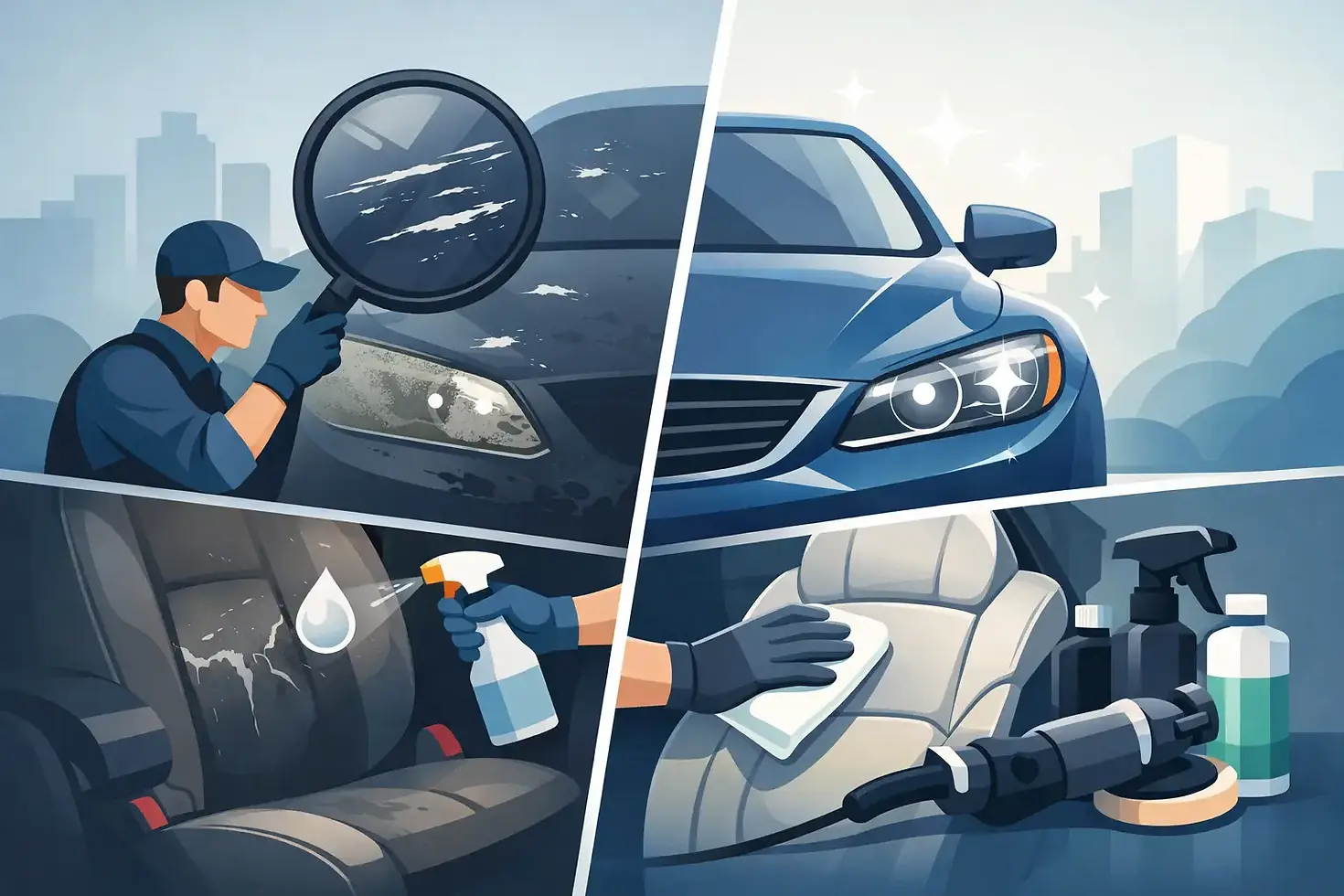
Extreme Detailing That Fixes Real Problems
If your vehicle still looks tired after a regular detail, the problem usually is not the wash. It is everything the wash did not fix. Extreme detailing is for the stains that stayed behind, the trim that keeps pulling loose, the dull paint that never looks clean in full sun, and the interior buildup that makes a vehicle feel older than it is.
A lot of shops stop at surface-level improvement. They clean what is easy to reach, dress the plastics, vacuum the carpet, and call it done. That works fine for newer vehicles in decent shape. It does not work when you are dealing with hard water spots, neglected paint, heavy interior grime, faded presentation, or small cosmetic issues that keep dragging the whole vehicle down.
What extreme detailing really means
Extreme detailing is not a fancier name for a basic package. It is corrective, labor-heavy work aimed at real appearance problems. The goal is not to make a vehicle look briefly cleaner. The goal is to improve condition in a way you can actually see.
That can mean removing stubborn water stains that ordinary washing leaves behind. It can mean correcting paint that looks cloudy, oxidized, or neglected. It can mean deep interior recovery on a vehicle that has been used hard, carried kids, pets, tools, or years of normal life. It can also mean handling the small repair-minded details that many places ignore, like loose trim, missing clips, or parts that need to be sourced and installed to finish the job properly.
This is where the difference shows. Standard detailing is usually maintenance. Extreme detailing is restoration-minded work.
Who needs extreme detailing
Not every vehicle needs this level of service. If your car is already in good shape and you just want it cleaned up, a standard detail may be enough. But if you keep noticing the same flaws after every appointment, you are probably past the point of basic maintenance.
Extreme detailing makes sense for used vehicles that need a reset, trucks and SUVs that have taken on years of wear, family vehicles with stained interiors, and owner-kept cars that deserve better than a quick shine. It is also a strong choice before resale, because visible condition matters. Buyers notice water spotting, dull paint, neglected trim, stained seats, and dirty door jambs faster than most owners realize.
For a lot of people, the decision comes down to frustration. They are tired of paying for "clean" when the vehicle still does not look right.
The problems basic detailing usually misses
A normal detail package is built for speed and broad appeal. That is why it often leaves behind the exact issues bothering the customer most.
Water stains are a common example, especially in Nevada conditions where mineral-heavy water and sun exposure can leave obvious marks on glass, paint, and trim. Those stains are not always simple wipe-off contamination. If they have sat long enough, they can bond, etch, and require focused correction.
Interior buildup is another one. A quick vacuum and wipe-down can improve appearance, but deeply embedded grime, sticky residue, neglected panels, and odor-holding materials need more time and more effort. The same goes for paint that has lost clarity. A wash may remove dirt, but it cannot correct oxidation, light defects, or the flat look that makes a vehicle seem older.
Then there are the annoying unfinished details - a loose molding, a trim piece that will not sit right, a minor cosmetic part that is missing and affects the overall presentation. Those issues are small on paper, but they matter because they make the whole vehicle look neglected.
Extreme detailing is part cleaning, part problem-solving
This is where many customers see the biggest difference. Real corrective detailing is not just about products. It is about judgment. You have to know what can be improved safely, what needs a different approach, and when a vehicle needs more than cleaning to look complete again.
That is why problem-solving matters as much as technique. Some stains need chemical treatment. Some finishes need correction. Some cosmetic issues need a hands-on fix, not another layer of dressing to hide them. A shop that works this way is looking at the whole vehicle, not just the checklist.
For customers, that means better value. You are not paying for motion. You are paying for results.
What to expect from extreme detailing results
The right expectations matter. Extreme detailing can make a dramatic difference, but honest work is not about making impossible promises. Some damage is too deep to remove fully. Some trim or interior materials may be permanently worn. Some paint issues can be improved a lot without becoming perfect.
That said, the improvement is often substantial when the work is done right. Paint can regain gloss and clarity. Water spots can be reduced or removed. Interiors can go from worn-down and discouraging to clean, fresh, and presentable. Small unfinished cosmetic issues can be corrected so the vehicle looks cared for again.
The best result is not just a cleaner car. It is a vehicle that feels worth owning again.
Why local, hands-on service matters in extreme detailing
Extreme detailing is not a volume game. It works best when the person doing the job actually cares about the outcome and is willing to spend the time where the vehicle needs it most.
That matters for two reasons. First, every difficult vehicle is different. One has hard water damage. Another has neglected interior plastics and stained carpet. Another looks decent from ten feet away but falls apart up close because the trim, finish, and details were never truly addressed. A one-size-fits-all process misses too much.
Second, trust matters when you are paying for corrective work. Customers want to know someone is looking at the real issues, not just upselling a bigger package. They want straight answers on what can be improved, what may remain, and what the finished vehicle should realistically look like. That owner-led, accountable approach is one reason people choose a local specialist over a chain.
In Carson City, that kind of service still means something. People want honest work, visible effort, and a result they can see with their own eyes.
Extreme detailing vs. a basic detail
The difference is not just how long it takes. It is what the service is trying to accomplish.
A basic detail is mainly about maintenance. It removes loose dirt, improves general cleanliness, and freshens the vehicle up. That is useful, and for some vehicles, it is all that is needed.
Extreme detailing is for condition problems. It is designed for vehicles that have gone past normal upkeep and now need correction, recovery, and finishing work. It takes more labor, more inspection, and more patience. It also costs more, which is fair when the work goes beyond surface cleaning.
The trade-off is simple. If your vehicle only needs upkeep, do not pay for restoration-level work. If your vehicle has visible issues that keep getting ignored, a basic detail is cheaper up front but often more expensive over time because it still does not solve the problem.
What to look for before you book
If you are considering extreme detailing, look for a service that talks plainly about condition issues and visible outcomes. Before-and-after work matters because it shows whether the shop can actually correct problems, not just wash around them.
It also helps to choose a detailer who is comfortable handling the extra details others skip. That includes water stain removal, cosmetic correction, and small fix-oriented items that improve the final result. A clean vehicle with obvious unfinished flaws still feels unfinished.
Best Auto Detailing built its reputation around that kind of work - not the easy jobs, but the ones that need more effort to get right.
Why it is worth doing
For many owners, extreme detailing is not about showing off. It is about stopping the slow slide into neglect. Once a vehicle starts looking worn, it gets easier to ignore the next issue, then the next one after that. Before long, the whole thing feels older, rougher, and less valuable than it should.
Corrective detailing changes that direction. It restores pride of ownership. It helps protect resale. It makes daily driving better because the vehicle looks and feels cared for again. And if you plan to keep the car, truck, or SUV for a while, that improvement pays off every time you open the door.
If your vehicle has problems a basic detail never seems to touch, that is usually your answer. You do not need another quick clean. You need the kind of work that actually fixes something.


Comments