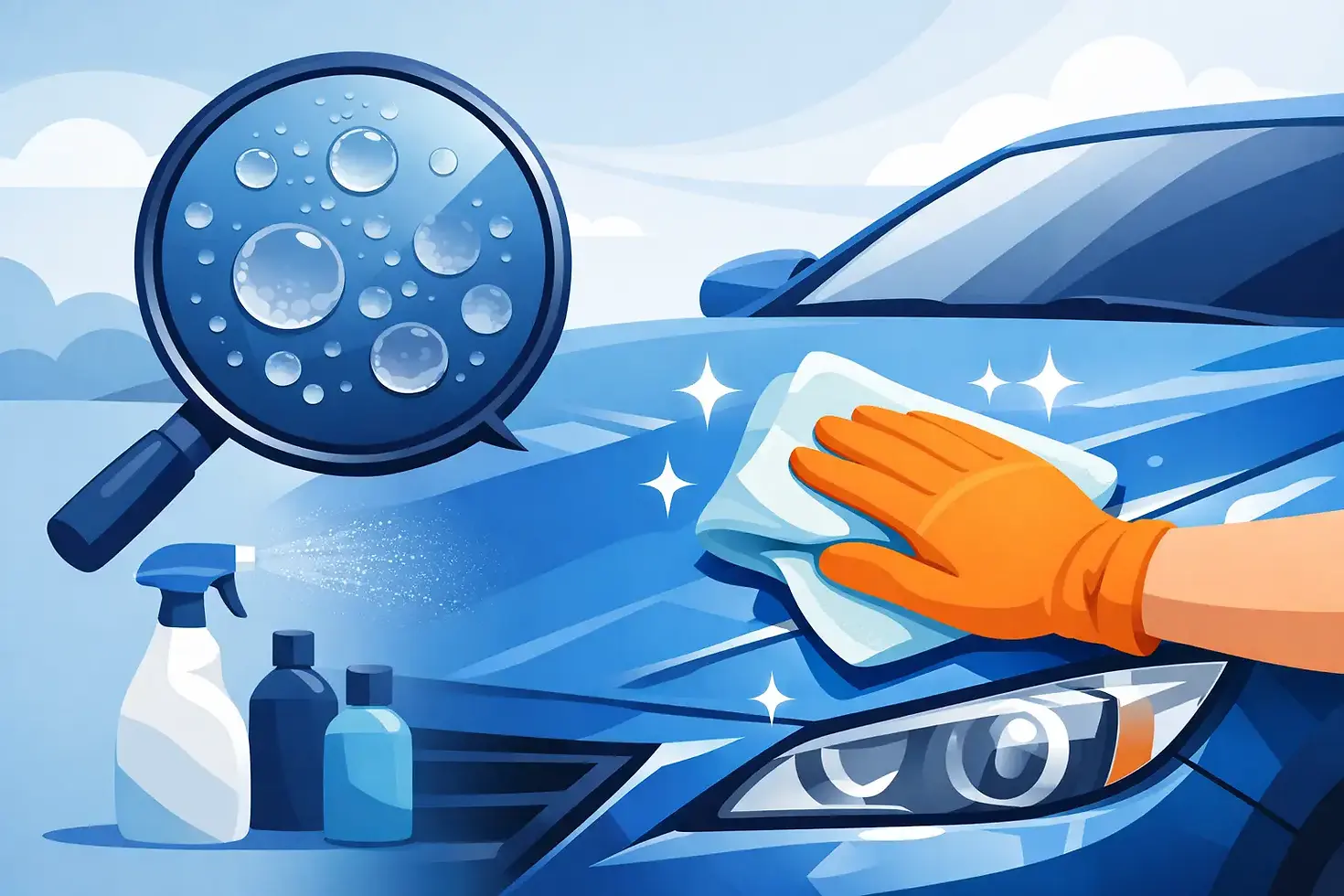
How to Remove Car Water Spots Without Damaging Paint
Those white, chalky circles on your paint are not just dirt. They are mineral deposits left behind when water dries on the vehicle, and knowing how to remove car water spots the right way can save you from turning a fixable stain into scratched or dulled paint.
In Carson City, hard water, sprinkler overspray, surprise rain, and a hot Nevada sun can make water spots show up fast. The heat dries the water before you have a chance to wipe it down, leaving minerals behind on paint, glass, chrome, and plastic trim. Catch them early and the job is simple. Let them sit for weeks or months, and they can etch into the surface.
First, Know What Kind of Water Spot You Have
Not every water spot needs the same treatment. A fresh spot sitting on top of the paint is usually a mineral deposit. It may look rough or hazy, but it has not damaged the clear coat yet. These spots often come off with a proper wash and a safe spot-removal product.
Etched water spots are different. The minerals have sat long enough to leave a mark below the surface of the clear coat, especially on dark-colored vehicles. You may wash the vehicle, wipe the area, and still see a ring or dull patch in the paint. At that point, stronger chemicals are not the answer. The finish usually needs paint correction by polishing the damaged layer carefully.
Glass is its own category. Water spots on windows can be stubborn because mineral buildup grips the glass hard, but glass can also scratch if the wrong pad, razor, or abrasive cleaner is used. Plastic trim and chrome need a lighter touch because harsh acid-based products can discolor them.
How to Remove Car Water Spots Safely at Home
Start in the shade with a cool vehicle. Working on hot paint is one of the fastest ways to create more problems because cleaners dry before you can rinse them away. Do not try to remove spots in direct sun just because they are easier to see. Move the vehicle into a garage, under cover, or wait until the panel is cool.
Wash away loose dirt first
Rinse the vehicle thoroughly, then wash it with a quality automotive soap and a clean microfiber wash mitt. This step matters. If you rub a water spot while dust or grit is sitting on the panel, you can grind that debris into the clear coat and create fine scratches.
Dry the vehicle with clean microfiber drying towels. Use light pressure and blot or pull the towel across the surface rather than scrubbing. Once the paint is clean and dry, you can see whether the spots are gone, reduced, or still firmly attached.
Use a dedicated water spot remover
For remaining mineral deposits, use a product made specifically for automotive water spot removal. Follow the label exactly. Apply it to a microfiber towel or applicator rather than spraying heavily across the entire vehicle, especially near trim, badges, and panel gaps.
Work one small area at a time. Gently wipe the spot, let the product work only as long as directed, then rinse or wipe the area clean. Do not let the product dry on the paint. Check your progress before moving on.
A simple 50/50 mix of distilled white vinegar and distilled water may help with mild, fresh mineral spots on glass or painted surfaces, but it is not a cure-all. Test it in a hidden area first, use it sparingly, and rinse it off promptly. Vinegar can loosen light deposits, but it will not repair etched clear coat. It can also be a poor choice for neglected finishes, sensitive trim, or vehicles with damage already present.
Clay only when the surface feels rough
After washing, run clean fingertips lightly over the paint inside a plastic sandwich bag. If the surface feels gritty, there may be bonded contamination mixed in with the mineral deposits. A clay bar or synthetic clay mitt can remove that contamination when used with plenty of lubricant.
Clay is not a substitute for polishing. It can make the surface smooth, but it will not remove a water spot that has etched into the paint. Used aggressively or without enough lubricant, it can also leave marring behind. If you are unsure, stop before you create a bigger correction job.
Polish etched spots instead of scrubbing harder
If the paint is clean, smooth, and still shows spot-shaped marks, the water has likely etched the clear coat. This is where hand polishing or machine polishing may be needed. A light finishing polish can improve mild etching, while deeper marks may require a more involved paint correction process.
There is a trade-off here. Polishing removes a very small amount of clear coat to level the damaged area, so it should be done with purpose, not repeated endlessly. Modern paint is not something to attack with a heavy compound, a kitchen scrub pad, or whatever abrasive happens to be in the garage.
For valuable vehicles, dark paint, older paint, or severe spotting, professional correction is usually the smarter move. The goal is not just to make the spots less visible. The goal is to restore clarity without causing unnecessary loss of paint thickness.
What Not to Use on Car Water Spots
The wrong shortcut can leave permanent damage that costs more to correct than the original spots. Avoid household scouring powders, steel wool, stiff brushes, bathroom cleaners, and abrasive sponges. They may cut through mineral buildup, but they can also scratch paint, haze glass, stain trim, or strip protection.
Be careful with aggressive acid cleaners too. Some are made for hard-water removal, but they are not automatically safe for every automotive surface. They can damage polished metal, uncoated aluminum, rubber seals, decals, and compromised clear coat. Stronger does not always mean better.
Do not use a razor blade on painted panels. Professional glass work may involve specialized tools in the right circumstances, but a blade on paint can create damage in seconds. Likewise, do not dry-buff water spots with a towel. Friction without lubrication is not correction.
When Water Spots Need Professional Detailing
You should consider professional help when the spots remain after a careful wash and safe remover, when the paint looks dull in the shape of water drops, or when the vehicle has widespread sprinkler damage. Severe spots often cover roof panels, hoods, trunks, glass, and trim at the same time. Treating one panel at a time with store-bought products can become a long, frustrating job with uneven results.
A proper inspection identifies what is sitting on the surface and what has already etched into it. From there, the process may include decontamination, targeted mineral removal, polishing, glass treatment, and paint protection. Each surface gets the approach it needs instead of one harsh chemical being used everywhere.
At Best Auto Detailing, water stain removal is treated like a correction job, not a quick wash add-on. If the finish can be brought back safely, the work should show it - the kind of before-and-after difference you can see when you walk up to the vehicle.
Keep Water Spots From Coming Back
The best prevention is simple: do not let water dry on the vehicle. After a wash, dry it completely with clean microfiber towels or forced air around mirrors, trim, door handles, and badges. Those areas hold water and can drip onto freshly cleaned panels later.
If sprinklers hit your parking spot, move the vehicle or adjust the sprinkler coverage if possible. Wash off overspray quickly, especially during hot weather. A quality wax, sealant, or ceramic coating will not make water spots impossible, but it gives minerals less chance to bond directly to the paint and makes cleanup easier.
Water spots are easiest to fix when they are new. Give them attention while they are still on the surface, use the mildest effective method, and do not keep scrubbing when the marks have clearly become paint damage. A careful correction now can keep a small annoyance from becoming the first thing you notice every time you look at your vehicle.


Comments