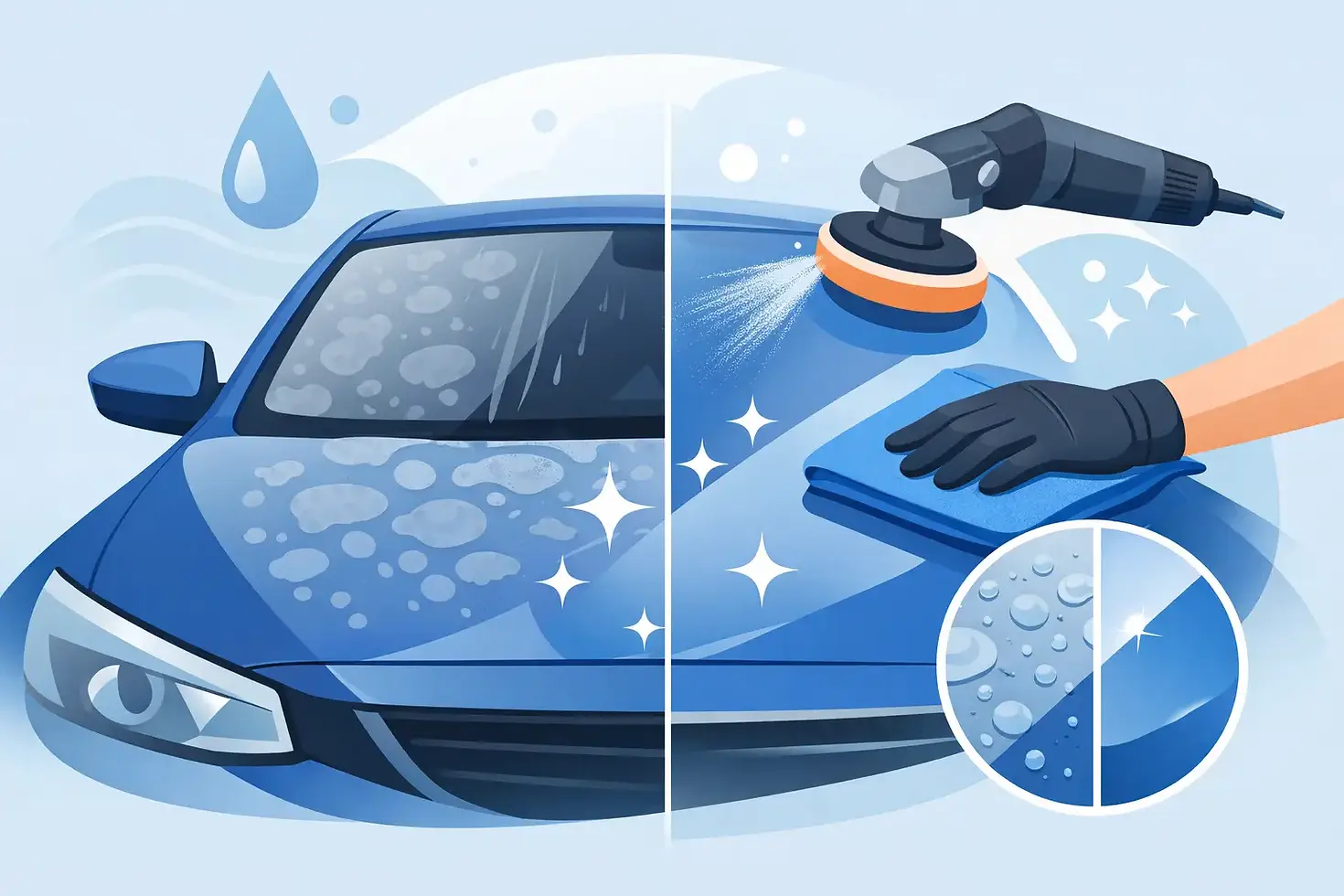
Can Detailing Remove Water Stains?
That cloudy spotting on your paint or glass is not just a wash issue. If you are asking can detailing remove water stains, the honest answer is yes, often very well - but not every stain is the same, and not every car needs the same fix.
Some water spots wipe off. Some need polishing. Some have already etched into the surface because minerals sat too long in the sun. That is where real detailing matters. A basic wash may make the vehicle look better for a day. Corrective detailing goes after the actual problem.
Can detailing remove water stains on every surface?
Usually, yes, but the process depends on where the stain is sitting and how deep it has gone. Water stains can show up on paint, glass, chrome, trim, and even around badges and mirrors where runoff dries and hardens.
On the mild end, you may have simple mineral deposits left behind after sprinklers, hard water, or rain mixed with dust. Those are surface-level stains. A proper decontamination wash and the right stain removal process can often clear them up without much trouble.
On the harder end, you may be dealing with etching. That happens when the minerals or contaminants sit long enough to bite into the clear coat or glass. At that point, the stain is no longer just sitting on top. It has started to damage the surface. Detailing can still improve it dramatically, and in many cases remove it, but the approach becomes more corrective and more labor-intensive.
What water stains actually are
Most vehicle owners call all spotting “water stains,” but there are a few versions of the same problem.
The first is mineral residue. This is the white or chalky spotting left behind when water evaporates and leaves calcium, magnesium, or other deposits on the surface. This is common in Nevada, where hard water and strong sun can work together fast.
The second is bonded contamination. This is when those deposits stick tightly enough that regular soap will not touch them. The vehicle may look clean after a wash, but the spots are still there.
The third is etching. This is the one people hate most because it looks like the stain is trapped under the surface. In a way, it is. The deposit or contamination has affected the clear coat or glass enough that removal may require machine polishing, glass correction, or at least a more aggressive restoration step.
That is why two cars with “water spots” can need completely different levels of work.
Why regular washing usually does not fix it
A drive-through wash is built for speed. Even a hand wash done at home usually focuses on dirt removal, not stain correction. If the minerals have dried and bonded, soap alone is rarely enough.
Worse, many people scrub harder when the spots do not come off. That can add swirl marks, haze, or scratches without actually removing the stain. We see this a lot on darker paint, where the vehicle ends up with both water spots and fresh wash damage.
Corrective detailing uses the right chemistry first, then the right level of mechanical correction if needed. That matters because the goal is not just to rub the stain around. The goal is to remove it safely and restore the finish.
How detailing removes water stains
The first step is identifying the surface and the severity. Paint, glass, trim, and chrome do not all respond the same way, so a one-size-fits-all product is usually the wrong move.
For lighter staining, a professional detailer may use a targeted water spot remover after a proper wash and decontamination. If the stain is still sitting on the surface, this can be enough to break it down and lift it off.
If the stain has bonded more deeply, clay treatment or surface prep may be needed. That clears away contamination and helps reveal whether the problem is truly a deposit or actual etching.
When the stain has marked the paint, polishing is often the answer. A machine polish can level the affected area enough to remove or sharply reduce the visible spotting. If the defect is deeper, more than one correction step may be required.
Glass can be trickier. Some water spots on windows come off with dedicated stain removal methods, while etched glass may need specialized polishing. In severe cases, especially if the damage has sat for a long time, the improvement can be strong but not always perfect.
That is the real answer customers appreciate. A skilled detailer should tell you what is removable, what is improvable, and what has become permanent damage.
Can detailing remove water stains from paint?
In many cases, yes. Paint is one of the most recoverable surfaces when the issue is caught in time. If the spots are mineral deposits sitting on top of the clear coat, they can often be removed fully.
If they have etched the clear coat, detailing can still make a major difference through paint correction. The final result depends on depth. Light etching often comes out well. Deeper marks may improve substantially without disappearing 100 percent.
This is where experience matters. Going too aggressive on paint just to chase one stain can remove unnecessary clear coat. Good detailing is not about brute force. It is about getting the best visual result while protecting the finish.
Can detailing remove water stains from glass?
Usually yes, but glass spots are often more stubborn than people expect. Sprinkler overspray, hard water, and heat can bake spots onto side windows and windshields fast.
If the stain is still a deposit, detailing can often remove it cleanly. If the glass has been etched, the result depends on how severe that etching is. Some glass comes back nearly perfect. Some improves enough to look much better and drive better, especially in sun glare, but still carries minor leftover marks.
That does not mean the work failed. It means the stain was allowed to become damage.
When the answer is “it depends”
Customers deserve a straight answer, and this is one of those areas where “it depends” is the truth. Three things matter most: how long the stains have been there, what surface they are on, and whether someone has already tried the wrong fix.
Fresh spots are easier. Old spots are harder. Paint usually gives more correction options than trim. Glass can go either way. And if the surface has already been scrubbed with harsh pads, cheap chemicals, or repeated wash tunnel abuse, the job becomes more complicated.
That is also why pricing can vary. A quick spot treatment is not the same as full paint decontamination and machine correction. One vehicle may need a basic corrective step. Another may need a full restoration approach.
Why local conditions make water stains worse
Around Carson City and the surrounding area, vehicles deal with strong sun, dry conditions, dust, and hard water. That combination speeds up spotting and makes stains set faster than many drivers realize.
A truck rinsed in the driveway and left to air dry can develop visible spotting quickly. A vehicle parked near sprinklers can build heavy deposits over time. Even a clean car can look neglected if the glass and paint are covered in baked-on mineral marks.
That is one reason this problem keeps coming back for local drivers. It is not always poor maintenance. Sometimes it is just the environment doing damage faster than expected.
What to do if your vehicle has water stains now
Do not keep scrubbing at it with random products. That usually wastes time and can make the finish worse.
Get the surface evaluated correctly. A real detailer should be able to tell whether the stain is removable residue or etched damage, and explain what level of correction makes sense for your vehicle and budget. At Best Auto Detailing, that kind of problem-solving work is exactly where the difference shows. This is not about making the car wet and shiny for an hour. It is about fixing what is actually wrong.
If the stains are mild, act sooner rather than later. If they are older and more severe, do not assume the vehicle is stuck that way. Many bad-looking water stains can be removed or greatly reduced with the right process.
The biggest mistake is waiting until a simple correction becomes restoration work. If your paint or glass is spotted now, getting it handled early usually means better results, less risk, and a vehicle that finally looks cared for again.


Comments