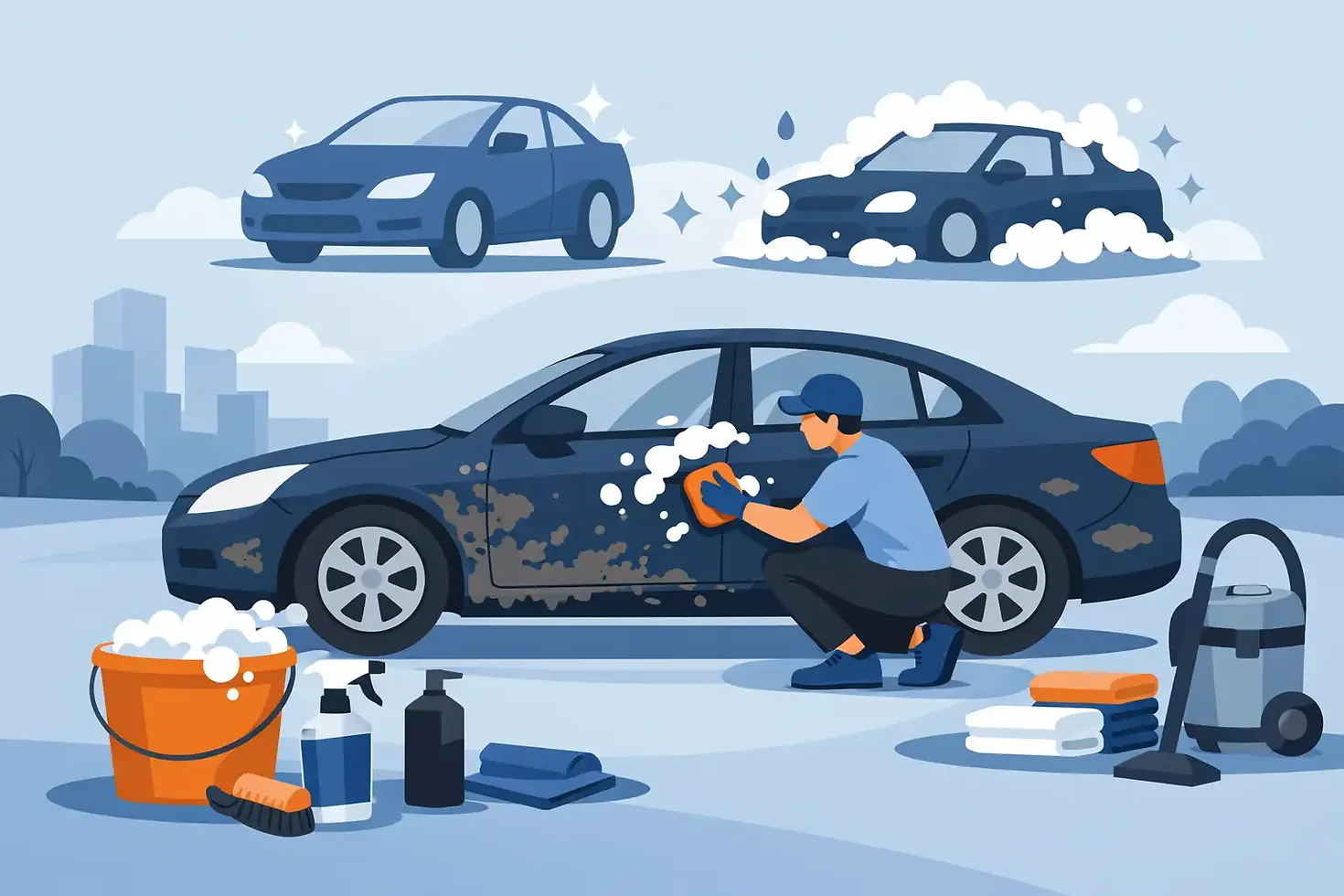
How to Detail a Dirty Car the Right Way
That layer of dust on the dash is not the real problem. The real problem is the ground-in carpet dirt, the sticky cupholder mess, the brake dust baked onto the wheels, and the stains that make the whole vehicle feel older than it is. If you want to know how to detail a dirty car, the goal is not to make it look decent for a day. The goal is to clean it in the right order so the results actually last.
A truly dirty car needs more than a quick wash and vacuum. It needs a system. Done right, detailing brings back the look of the paint, improves the feel of the interior, and helps you catch small problems before they turn into bigger ones. Done wrong, it wastes time and can leave scratches, streaks, and soaked carpets behind.
How to detail a dirty car without making it worse
The first mistake people make is rushing straight into washing the paint. If the car is heavily soiled, that usually means loose grit, mud, and brake dust are sitting everywhere. Rubbing that around too soon can put fine scratches into the finish fast.
Start by looking at the vehicle honestly. Is this normal road dirt, or are you dealing with caked-on grime, pet hair, food spills, water spots, salt residue, or neglected trim? The worse the condition, the more patient you need to be. A dirty daily driver and a neglected SUV that has been ignored for a year are not the same job.
Before you touch anything, gather what you need. At minimum, that means a hose or pressure washer, quality car soap, wheel cleaner that matches your wheel type, microfiber towels, wash mitts, brushes, a vacuum, interior cleaner, glass cleaner, and protectant for plastic or vinyl. If the paint feels rough after washing, clay or chemical decontamination may help, but that depends on the condition.
Start with the wheels and tires
Wheels are usually the filthiest part of the vehicle. They collect brake dust, road grime, grease, and tar. If you wash the body first and then clean the wheels, you risk splashing that grime back onto clean paint.
Spray the wheels and tires first. Let the cleaner do some work, then agitate with the right brushes. Use separate tools for wheels and paint. That matters. A brush that has picked up brake dust and grit should never touch the body panels.
Pay attention to the tire sidewalls. If they still look brown after scrubbing, they are not fully clean yet. A clean tire gives dressing a better finish and helps the whole vehicle look sharper.
Pre-rinse before contact washing
If you are serious about how to detail a dirty car, pre-rinsing is not optional. Knock off as much loose dirt as possible before the mitt touches the surface. Focus on lower panels, wheel arches, bumpers, and the rear hatch area where grime builds up the worst.
For heavily soiled vehicles, a foam pre-soak can help loosen dirt before washing. It is not magic, but it reduces how much contamination you drag across the paint. That lowers the chance of adding swirl marks.
Then wash from top to bottom. The roof, glass, hood, and upper doors are usually cleaner than the rocker panels and lower bumper areas. Work in sections. Rinse your mitt often. If the water or soap bucket is turning brown fast, that is your sign the car needed more than a basic wash.
Drying matters more than people think
A lot of decent wash jobs are ruined during drying. Using old bath towels, dirty rags, or wiping too aggressively can mark up the finish. Use clean microfiber drying towels and blot or glide gently over the paint.
If your area has hard water, do not let the car air dry in the sun. That is how water spotting starts. In Nevada, that matters. Heat and minerals can leave marks fast, especially on dark paint and glass.
At this point, feel the paint with a clean hand inside a plastic bag. If it still feels rough, contamination is still there. That does not always mean the car needs polishing, but it does mean the wash did not remove everything.
Clean the interior in the right order
A dirty interior can make a vehicle feel worse than it looks outside. The key is to work high to low and dry to wet. That keeps you from redoing areas.
Take out trash and personal items first. Move the seats. Check under them. Dirty cars hide a lot in the tracks, corners, and seat edges. Then vacuum thoroughly before using any liquid cleaner. If you spray cleaners onto loose dust and crumbs, you are making mud.
Start with the headliner carefully. Do not saturate it. Then clean vents, dash surfaces, trim, console areas, cupholders, door panels, and finally seats and carpets. Use brushes where dirt is packed into textured plastics or seams.
Fabric seats and carpets may need spot treatment or extraction if stains are set in. That said, more liquid is not always better. Overwetting carpets can create odor issues and slow drying times. Leather or vinyl seats should be cleaned with a proper interior cleaner, then protected if needed. The point is to remove body oils, grime, and residue without leaving everything greasy.
Glass, trim, and the details people notice
Clean glass last on the inside after the rest of the interior is done. Otherwise, dust and cleaner overspray can settle back onto it. Streak-free glass changes the whole feel of the vehicle, especially the windshield.
Trim deserves attention too. Faded plastic, dusty vents, dirty door jambs, and sticky buttons make a car feel neglected even if the seats and paint look better. These are the details many cheap wash services rush past. They are also the details owners notice every time they get in.
If there are minor cosmetic issues such as loose trim, missing clips, or weathered presentation around certain parts, cleaning alone may not fully solve the problem. Sometimes the right move is corrective work, not just more product.
When paint correction or stain removal is worth it
Not every dirty car needs polishing, but some do. If the paint still looks dull after washing and decontamination, the issue may be oxidation, water spotting, or swirls rather than dirt. In that case, a simple wash will only get you so far.
The same goes for interior stains. Some spots come out with basic cleaning. Others need stronger methods, repeat treatment, or realistic expectations. Coffee, grease, dye transfer, pet accidents, and old water stains can be stubborn. The honest answer is that results depend on how long the contamination has been there and what material it affected.
That is where experience makes a difference. Knowing when to stop scrubbing and switch methods saves surfaces. Knowing which problems are cleanable and which ones need repair saves time.
What people usually miss when detailing a very dirty car
The most overlooked areas are simple. Door jambs, seat rails, steering wheel buildup, pedals, trunk edges, fuel door areas, and the narrow gap between seats and console all collect grime. These spots are small, but they make a vehicle feel truly clean when handled properly.
People also underestimate odor. If the car still smells bad after cleaning visible surfaces, the source may be deeper in the carpets, under the seats, in the cabin filter area, or from old spills that were never fully removed. A fragrance can cover that for a day. It does not fix it.
There is also a trade-off between speed and results. A fast cleanup can improve appearance. A proper detail takes longer because it deals with buildup, not just surface dust. If the vehicle has been neglected for months or years, expect more than one issue to show up during the process.
When to do it yourself and when to call a pro
If your car is dirty but manageable, a careful do-it-yourself detail can make a big difference. If the vehicle has severe staining, baked-on water spots, pet hair everywhere, oxidized paint, or problem areas another shop ignored, that is where professional work starts to make more sense.
A real detail is not just cleaning what is obvious. It is finding what is making the vehicle look worn out and fixing what can be fixed. That may mean stain removal, restoring neglected trim, or correcting cosmetic issues a standard wash place will skip. Best Auto Detailing is built around that kind of work because many vehicles need more than soap, shine, and a quick vacuum.
A dirty car can absolutely be brought back. The trick is doing the job in the right order, using the right methods, and not pretending every problem is solved by the same bottle on the shelf. If you take the time to clean what others skip, the vehicle does not just look better. It feels cared for again.


Comments